
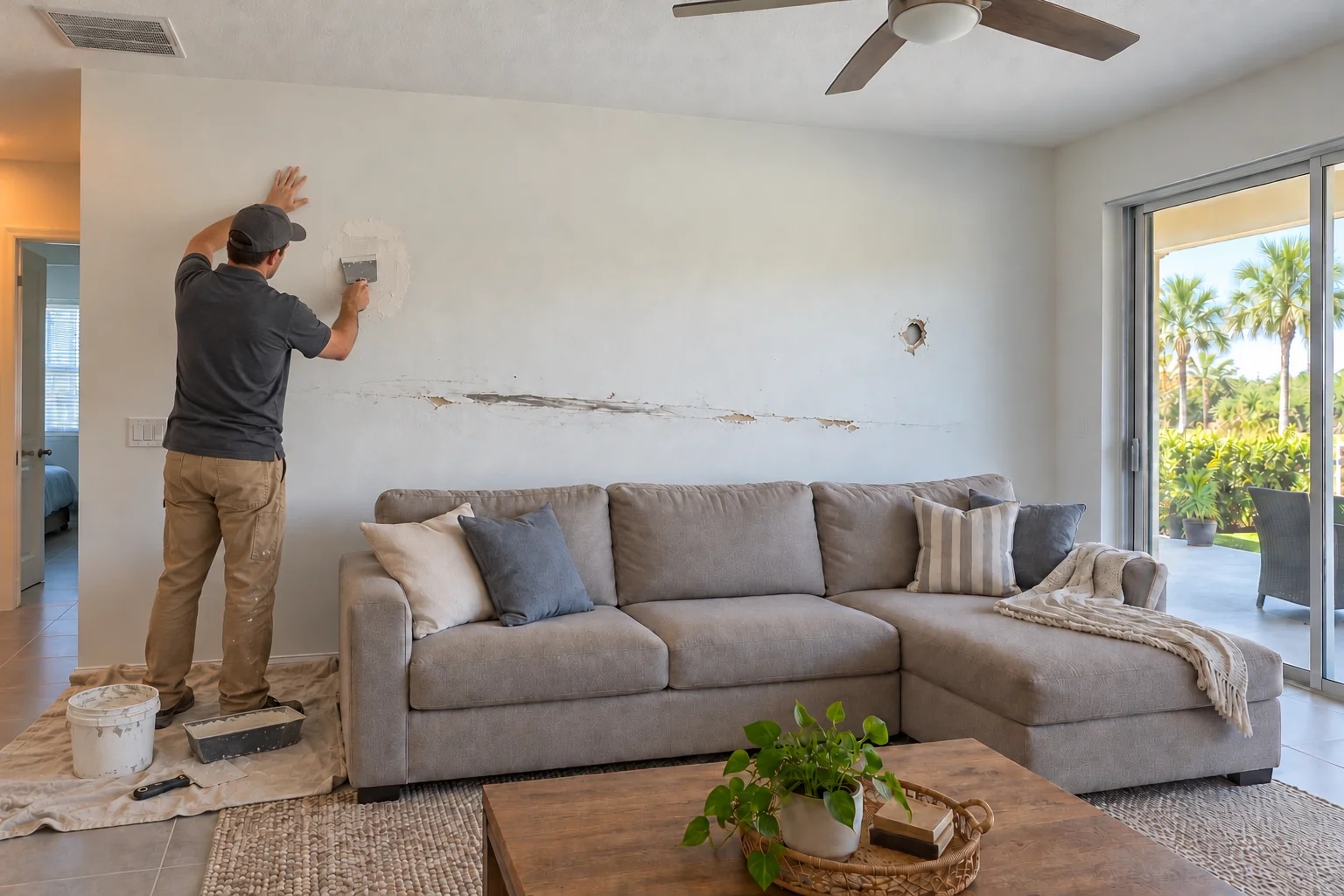
A great room wall with several impacts
Two holes behind a sofa and a long gouge should be photographed as individual defects and as part of the same wall. That shows how close the repairs are and whether they share a finish area. Broken board may need a supported patch, while a shallow mark may require surface preparation and compound. We assess the material instead of treating every hole the same way. Move furniture only when it is practical and safe to do so for the photos.
Make a repair list for each room
For a turnover or larger refresh, label your photos by room and note wall-anchor holes, damaged corners, and prior patches. A simple list helps prevent duplicate photos from being confused with separate problems. Tell us which surfaces you want repaired and whether any rooms are outside the scope. If a property manager is coordinating the work, identify the person who can make decisions about texture and painting. Clear information at the start makes the next steps easier to define.
Before & after
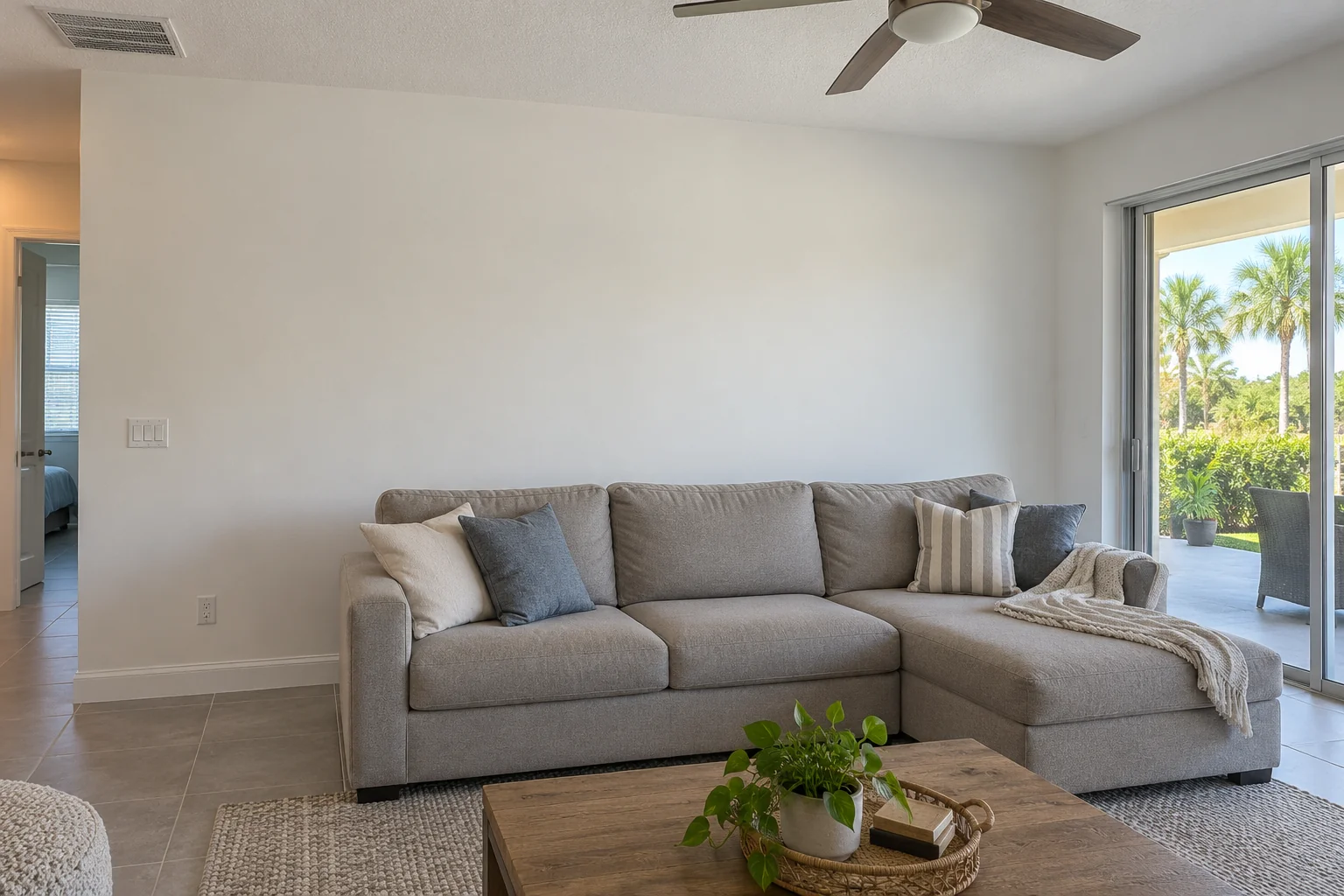
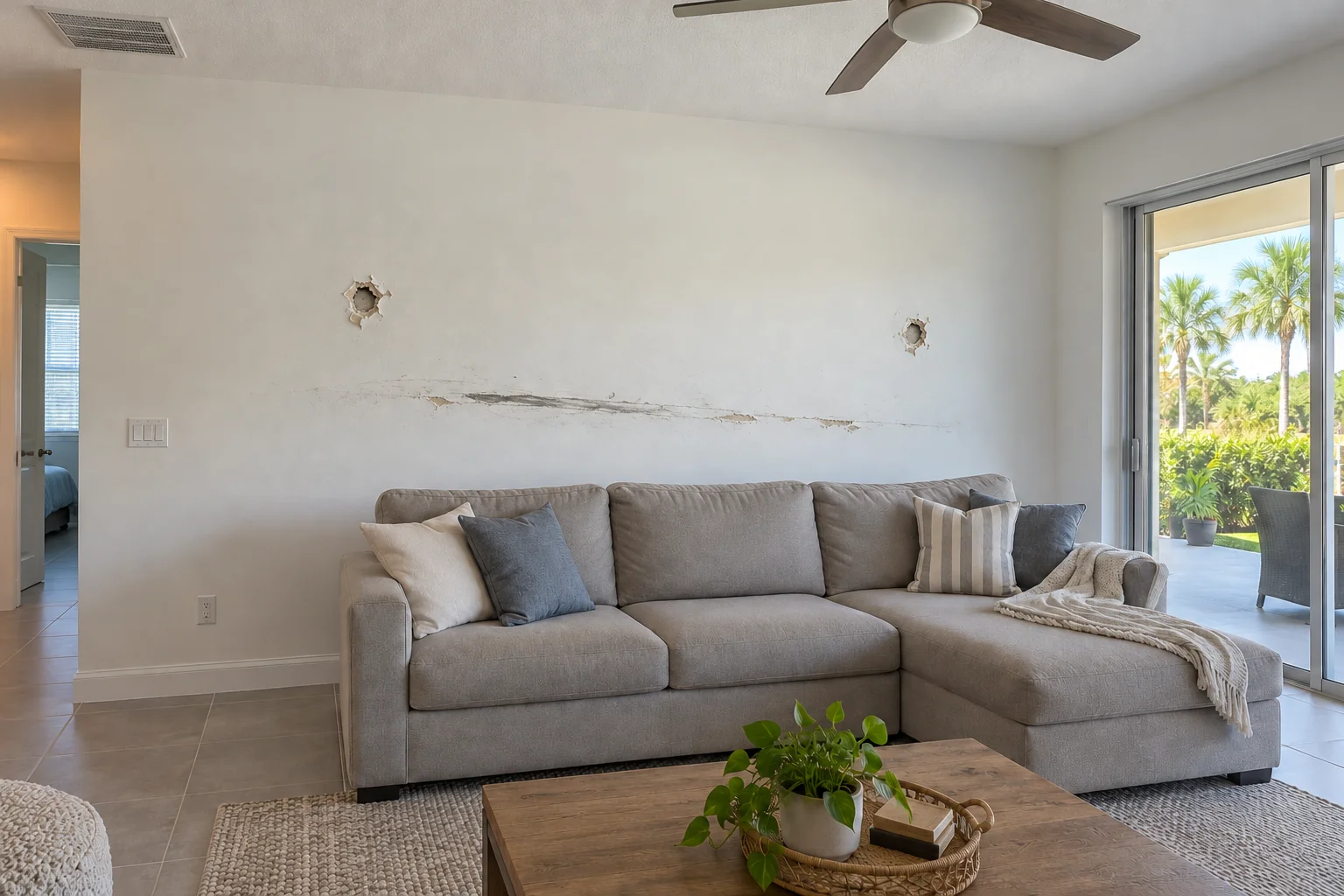 BeforeAfter
Working with knockdown and other finishes
Many local homes have textured surfaces, but the pattern can vary from room to room. A patch finished too smooth may stand out beside knockdown, while a heavy texture can be equally distracting on a lighter wall. We compare the surrounding surface and discuss a blend area. Strong light across an open room can make transitions more visible. We explain what the existing texture allows and avoid promising that every repair will disappear under all lighting conditions.
Coordinate patching before the final paint
If the property is getting a new coat of paint, schedule that work around completion of the drywall repairs. Let us know whether a painter is already involved and what preparation each party expects. The repair scope should identify board work, joint finishing, texture, and any painting separately. If you want only touch-ups, share the original paint information when available. Older paint and different sheen can make a small touch-up visible even when the drywall surface is properly finished.
Check the cause of repeated damage
A doorknob hole may return unless the door's travel is addressed. A recurring crack or stain raises different questions about the underlying condition. Tell us when a spot has been repaired before and whether moisture was involved. Active leaks should be corrected and affected areas evaluated before closing the wall. For impact damage, the drywall repair can be discussed alongside practical prevention, without assuming that patching alone will change how a door, piece of furniture, or busy passage is used.
Send one organized set of photos
Text us a photo, get a quote. Include your Port St. Lucie location, the close-ups, and a wide view of each affected wall. Add access details, other scheduled work, and the preferred finish. Our crew replies with next steps and identifies when an on-site assessment is necessary. Visit the main drywall repair page for the broader process. We also serve Jensen Beach, Stuart, and Palm City, and the Port St. Lucie hub links to related ceiling and water-damage services.
Questions from Port St. Lucie homeowners
Do you repair drywall in Port St. Lucie rental homes between tenants?
Yes. Send photos of each room that needs work and we can quote the patches, holes and scuffs together, so the home is ready to paint in one visit.
My Port St. Lucie home has knockdown walls. Can a patch blend in?
Knockdown is common in Port St. Lucie homes. We rebuild the patch flat, then apply and knock down texture to blend with the surrounding wall.
Can you fix a doorknob hole without replacing the whole wall?
Yes. Most doorknob holes take a backed or mesh patch, finished and textured to match. Adding a door stop afterward keeps it from happening again.