
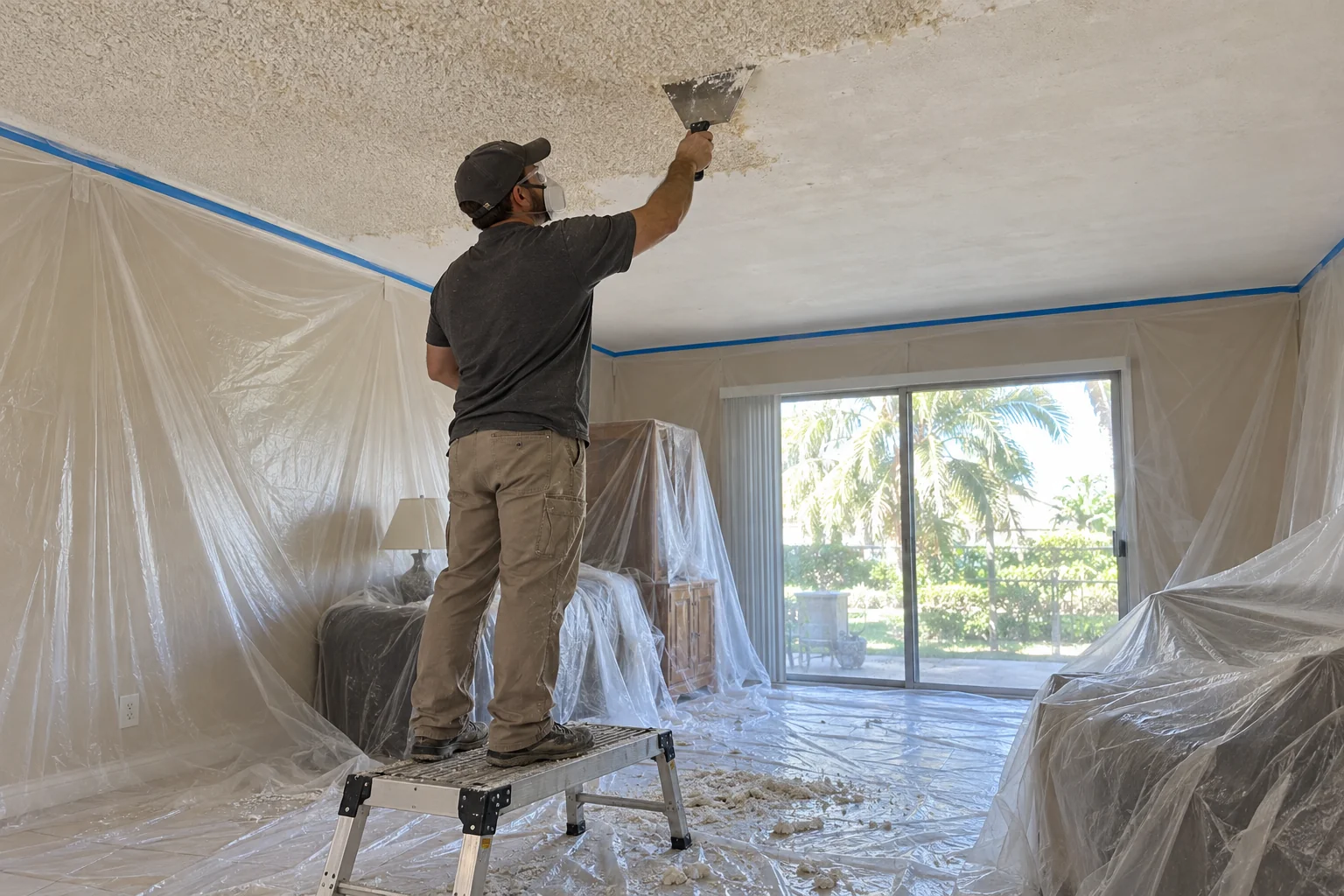
Start by understanding the existing ceiling
Popcorn texture can hide seams, older patches, and uneven areas. Removing it reveals the surface that will support the new finish. A ceiling that looks uniform before removal may need additional preparation once the texture is gone. That possibility belongs in the scope discussion at the start.
Tell us the approximate age of the home, whether the ceiling has been painted, and whether there are stains or damaged areas. Painted texture can behave differently during removal. Prior leak repairs, loose material, and repaired openings can also affect the preparation needed afterward.
Older ceilings and asbestos testing
Older textured ceilings should be tested for asbestos before removal. Appearance alone cannot establish what a ceiling contains. Avoid scraping or disturbing an unknown finish while you are waiting to understand its condition. An appropriate testing professional can explain how the material should be assessed.
If testing identifies asbestos, the project needs to follow the appropriate specialist process before ordinary ceiling refinishing is considered. Share the results and any related documentation when discussing the work. Testing and any required specialist services should be treated as separate parts of planning, rather than assumed to be included.
Before & after

 BeforeAfter
Protecting the room and planning access
Ceiling removal creates material that needs to be contained and collected. Preparation accounts for floors, walls, doorways, fixtures, and the route used to move materials. We discuss what needs to leave the room and what can be protected in place. Furniture that blocks access can limit how the work is carried out.
Ceiling fans, recessed lights, pendants, and vents need attention in the plan. Tell us whether you are keeping them or coordinating changes with another trade. Finishing around a fixture is different from repairing an opening after it has been moved.
Choose smooth or a new texture
A smooth ceiling gives the room a different appearance from knockdown or orange peel. It can also make surface variations more visible under strong side light. Choosing smooth may require more preparation than applying a textured finish over a sound, repaired surface.
We discuss the look you want and what that means for the existing ceiling. Retexturing is not simply a way to cover unresolved damage. Seams, loose areas, and necessary patches still need to be addressed. If you have a reference photo, send it with the room photos so we can compare the intended finishes.
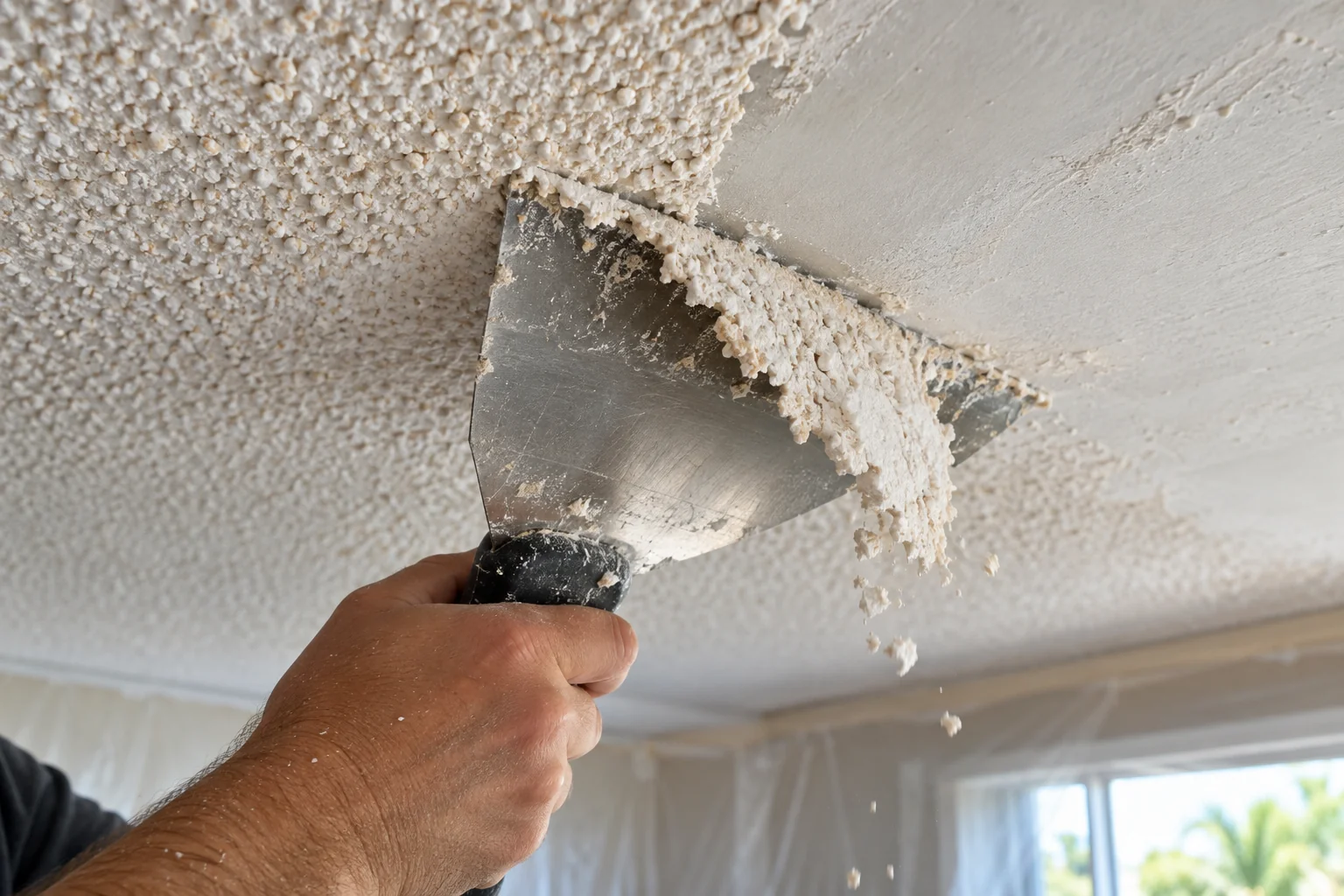
Repairing and finishing the exposed surface
After removal, the ceiling may need joint repairs, patching, or broader skim coating. The amount depends on what is revealed and how flat the final surface needs to be. A wider finish area can help avoid distinct edges around localized repairs.
Drying time between applications affects the work sequence. Primer and paint also belong in the plan, with clear agreement on what is included. We discuss how the work will progress and what conditions could change the scope instead of treating removal as the entire project.
Cleanup and planning your quote
Cleanup should be part of the agreed scope, including collecting removed texture and taking down protection when the work allows. Ceiling work can involve several stages, so talk with us about how the room will be used during that period. Access needs may change between removal, finishing, and painting.
Text us a photo, get a quote. Include your city, approximate room dimensions, ceiling height, furniture conditions, and any testing information. If you are updating several rooms, send a simple list so we can distinguish shared preparation from work specific to each space.
Acoustic ceiling removal and what comes after
Popcorn ceilings are also called acoustic or cottage cheese ceilings, and they were common in homes built from the 1960s into the 1980s. Removing the texture is only half the job. Once it is off, the ceiling underneath usually shows seams, old patches and dents, so we skim coat or retexture the surface before primer and paint. Homes built before the early 1980s should have the texture tested for asbestos before any removal, and we will talk through that step before work is scheduled.
Your questions, answered.
Can you tell from a photo whether the ceiling contains asbestos?
No. A photo or the appearance of the texture cannot establish that. Older ceilings should be tested before removal or disturbance, and the results should guide the next stage of planning.
Does the ceiling need to be smooth afterward?
No. A smooth finish, knockdown, or orange peel can be considered based on the surface and your preference. Each option has a different preparation and finishing scope.
Can painted popcorn be removed?
It may be removable, but paint can change how the material responds and how much work is needed. Tell us if it has been painted so we can assess the appropriate approach.
Should electrical changes happen before the ceiling is finished?
Coordinate new lights, moved fixtures, and other ceiling openings before final finishing where practical. Confirm the sequence with the electrician and our crew so completed work does not need to be reopened.
Will removal expose cracks or old patches?
It can. Texture may conceal surface conditions that only become clear afterward. The quote discussion should cover how additional repairs will be assessed and agreed on if they are needed.
Is popcorn ceiling the same as an acoustic ceiling?
Yes. Popcorn, acoustic and cottage cheese ceiling all describe the same sprayed-on texture that was popular in homes built from the 1960s through the 1980s.