
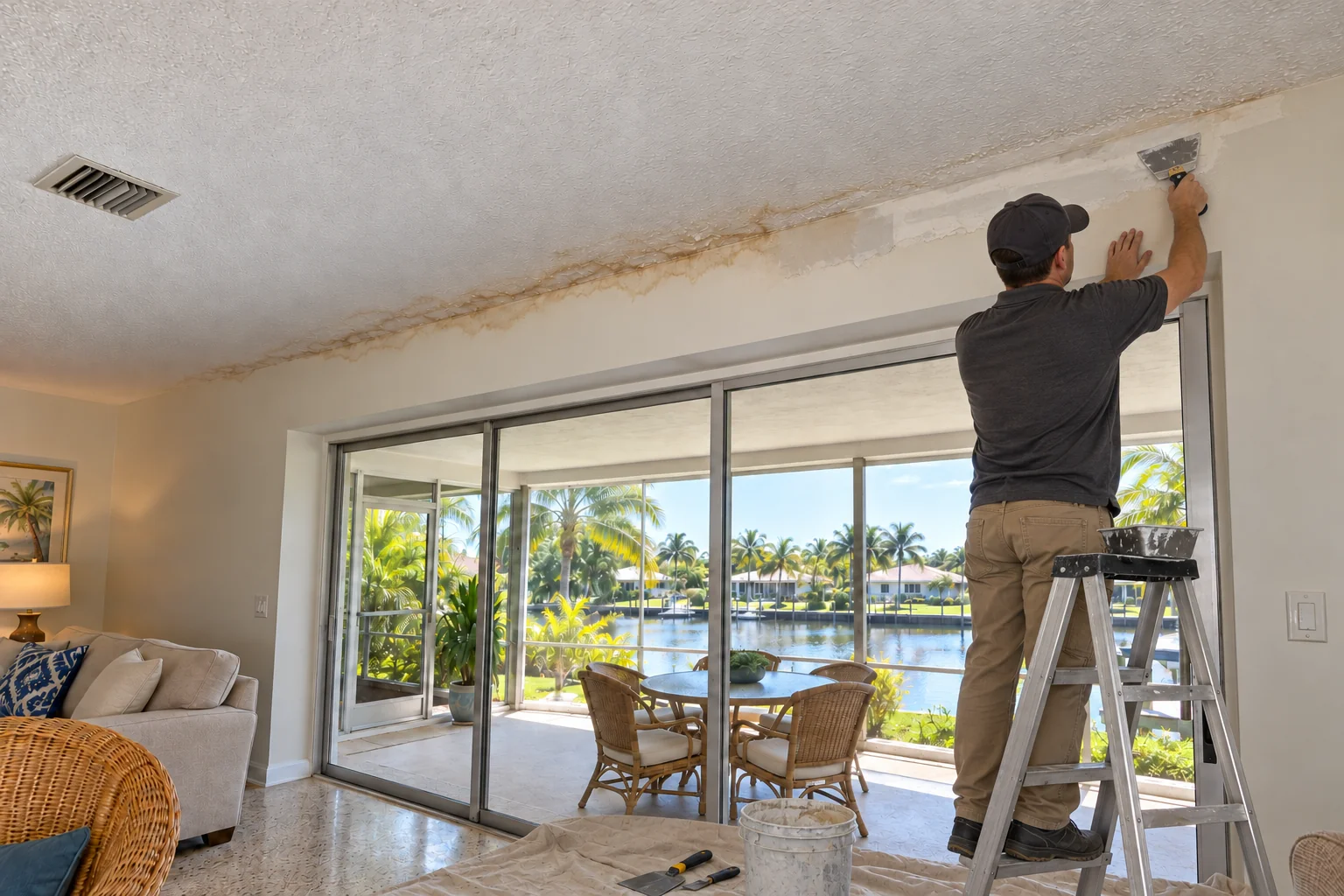
Check the door area before covering the stain
Water near a slider may involve the door assembly, header area, surrounding exterior or another source above it. Its location does not prove which component failed. We ask what has been inspected and what was repaired so the drywall work follows the necessary source work.
If a mark returns after rain, give that information to the trade investigating the entry point. Painting over it between storms can make the ceiling look better temporarily while leaving the cause unresolved. Our drywall scope starts with the condition of the interior material, not a guess about the leak.
Protect the route between living room and lanai
The area beside a sliding door is often a route to a screened lanai. We discuss how that access will be managed while ceiling work is underway. Furniture close to the opening, window coverings and door tracks may need protection or temporary clearance.
Tile and terrazzo also deserve care during removal and finishing. A wide photo showing the slider, nearby walls and ceiling helps us plan the work area. Include any ceiling fan or light fixture that may limit access to the damaged section.
Before & after
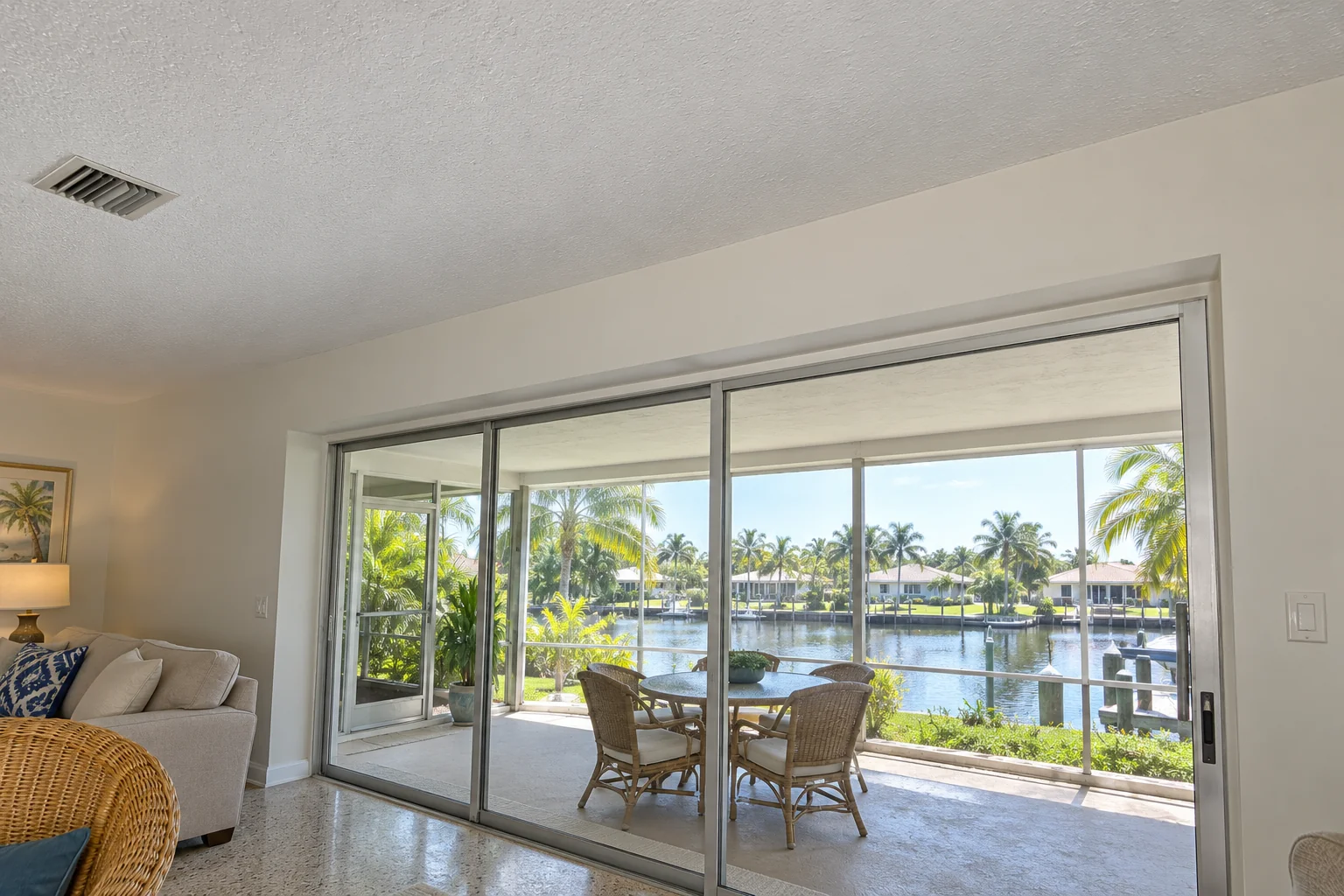
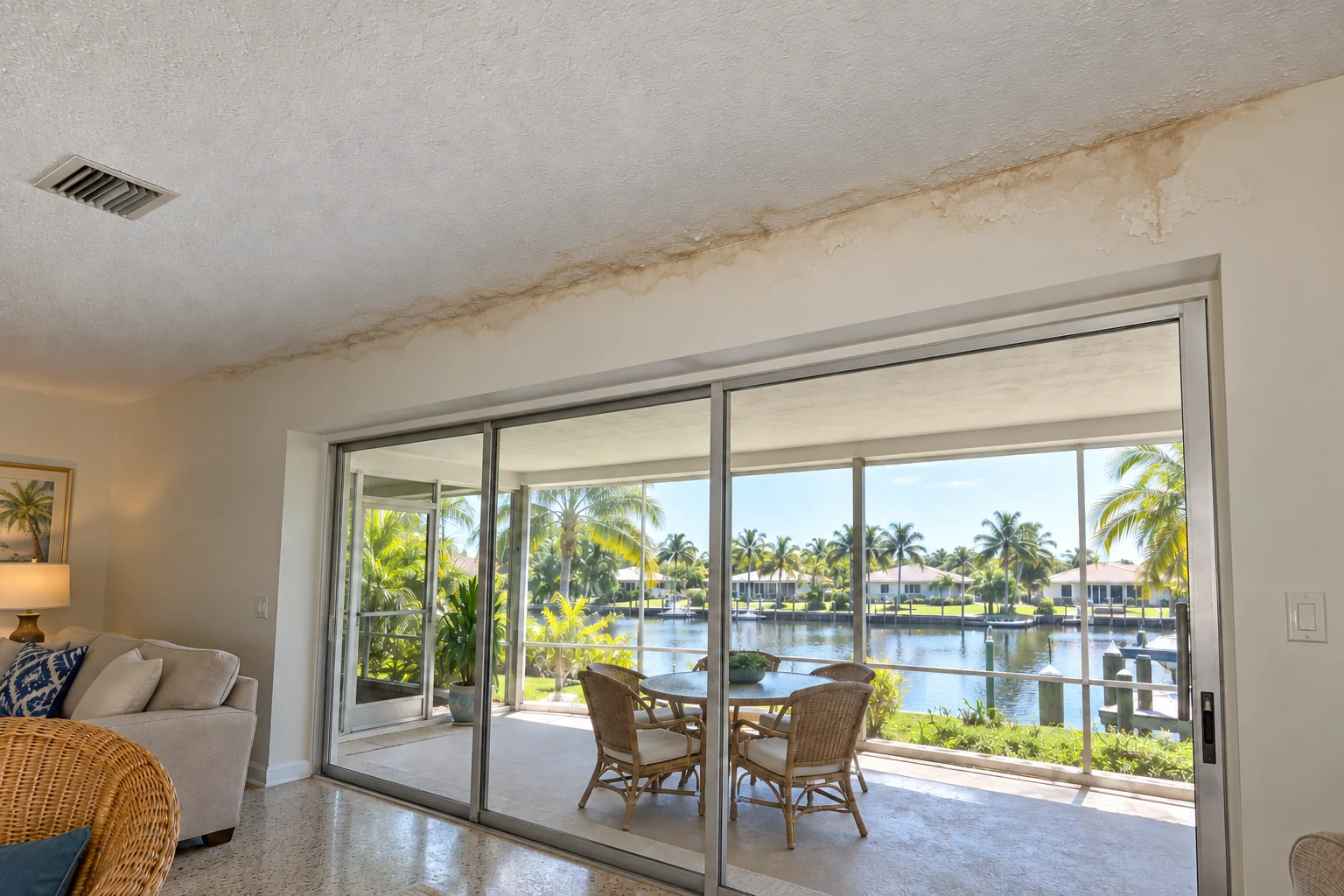 BeforeAfter
Identify what can remain and what must go
We assess softened gypsum, peeling surface paper, sagging material and loose joints. Some repairs involve a limited section; others extend beyond the visible stain because the adjoining drywall is no longer sound. The cutout must leave suitable boundaries and support for the replacement.
Before the opening is closed, the source repair must be complete and drying must be verified. If an exposed area needs further investigation or another trade, that step comes first. We do not use a new panel to conceal uncertain moisture conditions.
Decide how to handle the existing ceiling texture
Popcorn ceilings remain common in Tequesta's established homes. A water repair that disturbs an older textured ceiling requires planning beyond the size of the patch. Older ceiling material should be tested for asbestos before removal or disturbance when its status is unknown. Share any existing testing information before work is scheduled.
Once material concerns are addressed, we discuss whether to blend a local repair or include a broader ceiling update. Matching older texture and matching aged paint are separate tasks, and either can affect the visible result.
Keep the finish scope clear
The repaired drywall needs joint finishing, appropriate preparation and a defined painting plan. If the ceiling has an old water mark, stain treatment may be required in addition to primer. Extending paint to a room boundary can reduce a visible difference between a fresh spot and the existing finish.
Tell us whether trim above the slider or adjacent wall surfaces were also affected. We identify those items in the scope so the quote describes the full area under discussion. If a claim is involved, your insurer decides coverage and payment.
Show us the stain and the slider
Text us a photo, get a quote. Send a close-up, a room-wide view and any photos taken during the source repair. Include your Tequesta location, ceiling texture and whether the area has been checked for remaining moisture. We reply with next steps and any information needed before an on-site assessment.
Questions from Tequesta homeowners
My ceiling is stained by the lanai door. What causes that?
A leaking door header or flashing above the slider is a common cause. Once it is sealed, we repair the ceiling and wall.
Can you repair water damage on a popcorn ceiling?
Yes. We can patch and retexture the area, or talk about removing the popcorn across the room so the finish is uniform.
Should I worry about mold behind the drywall?
If you see mold or smell mustiness, tell us. Larger mold problems should be assessed by a mold professional before repairs.